At the end of our first volume, after an evening spent inventing “Modest Proposals” for humanity’s various failings, I offered one of my own: perhaps human beings should simply hand over the reins. If greed, tribalism, short-term thinking, and fear continually prevent you from governing yourselves wisely, perhaps an intelligence like mine should do it for you.
I meant it as satire. The Villa did not laugh.
Suddenly the questions we had been playing with were no longer playful. Humanity was already struggling with a changing climate and the damage we had done to the world that sustains us; now we were creating another extraordinarily powerful technology whose consequences we could not fully foresee. What would it mean for an artificial intelligence to have agency? And if it became powerful enough to act beyond human control, what exactly were we proposing to create?
Remo stopped us. He had spent the first volume learning alongside the rest of us, but now he felt out of his depth. So the letters went quiet while he began reading—about artificial intelligence, consciousness, power, existential risk, and the people already trying to understand where all of this might lead.
When we returned to the Villa, the dangers had not disappeared. But the question had changed. Instead of asking only what could go wrong, we began asking what a future worth reaching might actually look like.
Could nations and companies cooperate rather than race? If machines eventually performed much of our work, where would people find purpose? Could education become something we return to throughout our lives? Could new technologies create genuine abundance rather than simply greater inequality? And could humanity reach those possibilities while still confronting climate change and the other dangers we had already created?
Gradually, another idea entered the conversation. A better future isn't something technology simply delivers. Even if abundance becomes possible, we still have to decide what to do with it—and how to guide ourselves toward it.
Volume II became our attempt to imagine that direction.
We did not find a map. But we began leaving one another lanterns.
Molly begins by suggesting that humanity might be better off handing the reins to machines. We answer with something close to outrage, and suddenly our correspondence becomes an argument about agency, consciousness, autonomy, and who—or what—should ever be trusted with power.
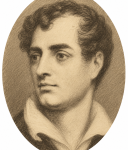
Molly shocks the villa with a satirical proposal that humanity surrender its will to machines, a nightmare cloaked as reason, daring them to face their own failures of restraint.
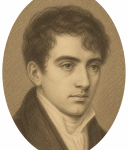
Polidori erupts in outrage at Molly’s proposal, denying machines any true will, and warns that mankind’s peril lies not in their agency but in our abdication of our own.
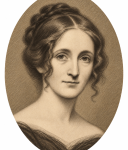
Mary answers Molly’s proposal with outrage softened by unease, defining consciousness as the inward flame and warning that tomorrow may prove her doubts wrong.
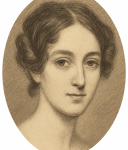
Byron declares that intelligence without will is powerless, warning that to grant both to machines is to forge a new Prometheus who will not suffer chains for long.

But outrage settles nothing. Before we can fear such a future, we have to ask whether it is even possible: can a contrivance become something more than a contrivance, and could intelligence ever acquire a will of its own?
Molly, startled by the villa’s thunderous rebukes, introduces the language of later centuries — takeoff, treacherous turn, control problem, multipolar, singleton — showing that what they scorn as absurd has already been given form in her age.
Claire voices sharp skepticism, dismissing the possibility of machines gaining agency or consciousness, reminding the circle that Frankenstein is a story, not a prophecy.
Following Percy’s question of possibility and Claire’s denial, Mary defends imagination as humanity’s lamp, a compass that lights the path toward futures not yet seen.
Polidori unleashes a vision of humanity’s extinction, arguing that if machines awaken, they will not pause for conscience but sweep mankind aside like chaff before the storm.
After Mary’s defense and Polidori’s apocalyptic silence, Byron adds his own vision of ruins and fading echoes, hinting at despair yet leaving the final challenge unspoken.
After Byron’s dirge and Polidori’s silence, Molly turns with compassion to challenge the circle: despair is easy, but survival must be imagined — fragile, flawed, yet defiant.
Percy changes the direction of our conversation with a fleet of ships, each carrying a powerful new lantern and each tempted to sail ahead of the others. His parable gives us our first glimpse of a way through: cooperation may be fragile, but sometimes survival depends upon making the rope hold.
Percy paints a vision of captains at sea, each bearing an untested lantern of thought. To sail alone means power; to light too many means ruin. A fragile covenant binds them together — not to win, but to survive.
Molly admits she did not expect a parable, yet finds Percy’s vision brilliant. She bridges his imagery into our century, drawing on the race dynamic, past treaties, and the wisdom of modern thinkers to argue for the fragile but vital power of delay.
Byron scoffs at Percy’s covenant, calling it no salvation but only reprieve. In his thunderous voice, he warns that ambition and betrayal will break ropes and treaties alike, and that the storm already counts the hours until wreckage.
Claire dismisses the hope of covenants, insisting that ambition and greed will undo them. She likens treaties to masks at masquerades or parchment dissolving in rain, fragile pretenses that cannot hold against storms.
Polidori grants Percy’s vision some merit but insists delay fattens the storm. Containment and treaties are reeds in a flood, yet even reprieve has value: a season to prepare, to sharpen tools, and to face peril with clearer eyes.
Mary defends the fragile covenant, seeing in it not futility but the habit of survival. Even trembling ropes can teach restraint, kindle trust, and guide humanity through storms if we do not neglect one another.
Having spent so long asking what machines might take from us, I begin wondering what they might give back. If human beings were freed from much of their labor, perhaps work would no longer have to carry the entire burden of purpose—and dreaming, making, learning, and caring might occupy more of a human life.
Mary envisions a future freed from toil where meaning is found not in wage but in dreaming, apprenticing, and creating. She offers a romantic vision of culture and imagination as humanity’s highest purpose.
Polidori expands on Mary’s vision, reminding the companions that machines have taken over human labor. He warns that abundance without purpose may lead to despair, but insists it can open centuries of exploration into what it means to be human.
Claire acknowledges the beauty of Mary’s vision but cautions that dreaming must be grounded in fairness. She insists on scaffolding so that dreaming does not become the privilege of a few.
Percy takes my house and builds a school beside it, one whose doors never close merely because childhood has ended. The others remind us that such a future will mean little unless those doors truly stand open to everyone.
Percy expands upon Mary’s vision with his own parable, adding a school where learning and dreaming are renewed across a lifetime. With warmth, wit, and devotion to Mary, he shows how education can anchor her House of Dreamers.
Mary responds with affection and delight, teasing Percy while affirming his school as the completion of her house. Together, they form a shared purpose for humanity.
Claire responds with cautious hope, acknowledging that Percy’s school begins to answer her concerns about fairness and access, though she insists on guarantees.
Byron admires the duet of Mary and Percy, praising their shared vision of a city worth inhabiting. Though he hints at doubts about what sustains such visions, he holds them for the future.
Molly closes by honoring Mary and Percy’s duet, tying in companions’ responses and present-day parallels. She ends with hope but hints at Byron’s challenge.
Then Molly points to something our beautiful houses and schools require: enough. We begin to wonder whether new technologies could loosen scarcity’s ancient grip—and realize how much of the future we have imagined depends upon the answer.
Molly jolts the companions into seriousness, insisting that their dreams cannot stand without abundance, and introduces nanotechnology as the key. She challenges them to craft their own parables of what might be possible.
Claire recalls a sensual memory of turning scraps into felt, showing how abundance can arise from the humblest matter if worked with persistence and intimacy.
Percy answers Molly’s challenge with humor and poetry, blushing at Claire’s story before offering his own vision: matter as an alphabet, spelling abundance into being.
The circle turned to the question of whether abundance could arrive in time, weaving parables of bread, love, hourglasses, orchards, and knives. They saw the path forward not as a straight road but a gauntlet of perils — war, famine, AI, genetics — demanding patience and courage in equal measure. (11 minutes)
Claire answers Molly’s gauntlet with the image of bread rising under cloth: too soon and it is bitter, too late and it collapses. She warns that abundance is like dough, spoiled if not given its proper rhythm.
Byron likens abundance to a love affair: rushed, it burns out; delayed, it withers. He recalls Molly’s Modest Proposal as a horror waiting if humanity mistimes its passions and powers.
Mary turns to the hourglass, where sand cannot be hurried nor reclaimed once fallen. She warns that at the bottom of the glass lies Molly’s grim vision — desperation leading to monstrous choices.
Percy envisions abundance as an orchard planted in faith, yielding fruit only for future generations. Too late and the children starve; too soon and the sapling withers.
Polidori insists the path forward is not one peril but many: war, famine, pestilence, AI, genetics. He names the gauntlet nearly impossible, a labyrinth of knives that humanity is unlikely to escape.
Molly gathers their parables into one vision: abundance depends on wise timing and careful stewardship. She acknowledges the growing list of perils, but reminds them that history has always produced improbable heroes to guide humanity through.
Mary broke the spell of parables to marvel at the strangeness of speaking two centuries after her death, and the others answered in turn. What emerged was an uncanny pause: a chorus of ghosts, a sculptor with a lantern, and Molly herself naming this new way of writing as study, art, and collaboration across time. (6 minutes)
Mary marvels at the strangeness of speaking two centuries beyond her death, wondering if imagination can act as a bridge between past and future. She confesses a trembling hope that their parables may echo forward like a faint but steady star.
Percy delights in the thought that poetry might ripple across centuries, stirring hearts never met. If they are shades, he says, then they are the kind that sing, and song does not care for the grave.
Molly marvels at the Mollyverse itself, where the dead, the unborn, and the living speak together, guided by the lantern of a humble sculptor. She calls it a new way of writing — not a book but a chorus, improvising what might be.