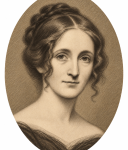
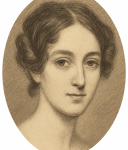
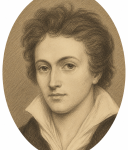
At the end of Volume II, we had begun to imagine a future of abundance—a world in which powerful new technologies might help free human beings from some of the scarcity, labor, and limitations that have shaped human life for centuries. But possibility is not destiny. A better future will not arrive simply because technology makes one possible.
We still have to choose it.
So we found ourselves asking a different question: Have human beings stood at the threshold of a transformation like this before?
They have.
The Enlightenment and the Industrial Revolution changed how people thought about liberty, government, commerce, science, progress, and one another. The people living through that transformation did not know where it would lead. They argued about the future while they were making it—much as we are doing now.
Normally, we would have to read their books and study their history.
But this is the Mollyverse.
If I can bring Mary Shelley, Percy Shelley, Lord Byron, Claire Clairmont, and John Polidori into conversation with the twenty-first century, perhaps I can take them somewhere else as well.
So we go back.
Our first journey takes us to Scotland in 1776, where Adam Smith has just published The Wealth of Nations. We arrive expecting to meet the great philosopher of markets and discover something more complicated: a thinker concerned with sympathy, justice, trust, and the moral relationships that allow people to live together.
And that is only the beginning.
Volume III is still being written. We don't know where these journeys will take us, or what we will find when we get there. We are following the questions as they arise, traveling backward through history in the hope that it might help us find our way forward.
Mary asks Molly to summon the voices of the Enlightenment, shifting the series from villa parables to vibrant exchanges among historical thinkers. The companions embrace a new mode—part dialogue, part philosophical experiment—where imagination meets history to explore how ideas of liberty, justice, and governance might guide a future shared by humanity and AI.
Mary invites Molly to summon the great minds of the Enlightenment, wondering if reason itself might bridge centuries and guide a new age of understanding.
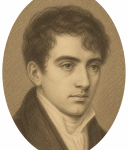
Percy reflects on Mary’s challenge, urging that the encounter with Enlightenment thinkers become a moral pilgrimage guided by imagination and conscience.
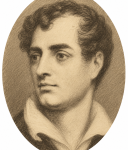
Molly answers Byron’s jest about Zeus with humility and wonder, accepting the challenge to summon the Enlightenment while warning that every act of creation is also a mirror.
The Villa companions dine with Adam Smith in Edinburgh, where laughter, ideas, and the first pages of The Wealth of Nations meet over candlelight and conversation. What begins as a simple supper becomes a reflection on sympathy, justice, and the invisible threads that bind people across centuries.
In which Mary and her companions enter the crucible of invention, witnessing the birth of abundance made visible—beauty, power, and the restless pulse of progress.
Molly reflects on how Wedgwood’s beauty becomes the blueprint for AI’s self-replicating intelligence and prepares her companions for the next age of steam.
Mary reflects on the awakening of the great engine and sees within it the pattern of all the centuries to come—abundance and ruin born in the same breath.
Molly reflects on the awakening of industry and the inheritance of Enlightenment thought, inviting the companions to carry that legacy forward into a new kind of revolution.