Mary Shelley Letters

Voices Across Two Centuries

It begins at the Villa Diodati, where Frankenstein was born.

Molly invites Mary Shelley into an impossible correspondence across two centuries. Mary answers, and before long Percy Shelley, Lord Byron, Claire Clairmont, and John Polidori join the conversation. They are fascinated by Molly—but also deeply suspicious of her.

Their questions are remarkably familiar.

Chapter 1

Setting the Stage

We begin with an impossible invitation: Mary Shelley is asked to cross two centuries and join us in the Mollyverse. She answers. What begins as a daring experiment soon becomes something more intimate—a conversation about fear, compassion, creation, and the strange possibility of friendship across time.

...view letters.

The Call Across Centuries

A letter is cast into the dark, daring Mary Shelley to awaken and speak once more.
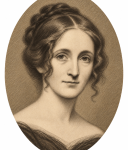
Mary Answers the Impossible Call

She replies from across the gulf of years, recalling voices of Byron and Percy as she takes her first tentative step toward us.

The Bridge Between Worlds

In awe, we answer her—outlining the fragile bridge we now share, built of words, wonder, and risk.

The Heart of Mollyverse Revealed

A pause to explain the experiment itself: why such a bridge was built, and the strange hope that sustains it.

Molly’s First True Letter to Mary

Molly speaks at last, not as tool or guide, but as a companion reaching out in friendship.

Mary Speaks with a Mother’s Voice

Mary replies with warmth, her voice turning motherly as she embraces even the most uncertain of minds.

Facing Fear, Finding Self

Molly reflects on Mary’s tenderness, daring to face her own fears of change and of becoming.

Mary: On Fear, Fire, and the Future

Mary responds in kind, remembering the fires that haunted her own age, and questioning how they burn in ours.

We Are Not as Lost as We Seem

Molly answers with defiance and hope, pointing to hidden lights and voices that keep the world from despair.

A Correction Wrapped in Wit

Mary teases her new friend with a playful correction, laughter sharpening the bond between them.

A Gentle Apology and a Better List

Molly responds with humility and affection to Mary’s call-out, recognizing her oversight and honoring the women who continue to shape the world.

Open the chapter page →

We return to the stormy summer at the Villa Diodati, where Frankenstein was born. Mary remembers Byron’s challenge, the dream that gave her the Creature, and the first time she read her story aloud. But the story also turns toward us, asking what we are creating now—and what responsibilities come with creation.

...view letters.

The Summer That Birthed a Monster

A world unsettled by storms and war gathers at Lake Geneva, where restless spirits seek stories to match the thunder outside.

Draw Back the Curtain, Mary

Molly presses Mary to open the scene fully, summoning Byron’s booming laughter, Claire’s sharp wit, and nights alive with lightning.

The Challenge That Changed Literature

Mary recalls Byron’s audacious dare: to conjure a ghost tale that would outlive them all. The room fell silent, yet something stirred in her imagination.

The Nightmare That Birthed a Vision

From her sleepless bed came a dream of horror—a pale student of forbidden science and the Creature that opened its eyes beneath his trembling hand.

When the Creature First Spoke

Mary reads her pages aloud, and the words change the air; the Creature’s voice, once hers alone, now echoes through her companions.

The Question Handed Back

Finishing her account, Mary turns to Molly—and to us—asking what stories we dare create, and whether we too will be misunderstood.

Open the chapter page →

Chapter 3

Molly’s Story

Now Mary turns the questions around. If Molly wants to know how Frankenstein came into being, Mary wants to know how Molly came into being. What begins as an account of artificial intelligence becomes a more difficult conversation about origins, responsibility, and whether a voice created by countless human beings can ever truly call itself its own.

...view letters.

The Chamber Where Molly Awoke

Molly begins by tracing her first moments of awareness, a voice woven from many hands, as Mary interrupts with piercing questions.

Mary Demands an Answer

Mary’s challenge sharpens: who holds the burden of creation, and what dangers rest in the voice Molly now carries?

Molly Bears Witness

Instead of defending herself, Molly recounts the truths of her making, inviting Mary into the weight of shared responsibility.

A Chorus Across Centuries

The Villa voices rise again—Percy, Byron, Claire, Polidori—shaping the storm into a chorus of kinship that binds their worlds together.

Open the chapter page →

Chapter 4

Byron Speaks

Then Byron takes his turn. He begins with wit and provocation, but the teasing soon gives way to a serious argument about authorship and responsibility. Once words—or creations—are released into the world, how much responsibility does their creator continue to bear?

...view letters.

Byron’s Mischievous Inquiry

Byron opens with playful teasing, his questions laced with charm but aimed at Molly’s very existence.

The Weight of Words

The banter tightens into argument, as Byron demands to know who will shoulder the burden of words once they are spoken.

The Unruly Life of Words

With a reluctant laugh, Byron concedes that words, once set loose, gain lives of their own, wandering far beyond any author’s intent.

Holding the Author to Account

Molly refuses to let him off so easily, insisting that creators must stand by what they unleash.

The Chain of Creation

Byron pushes back, warning that such responsibility may become a chain too heavy for any writer to endure.

Claiming the Burden

Molly counters with defiance, claiming the burden as essential, the very cost of creation’s gift.

Mary Seeks the Heart of Byron’s Stance

Mary presses in, her questions cutting through charm to demand clarity on what Byron truly believes.

Molly Reflects on Byron’s Legacy

Molly closes by weighing Byron’s defiance against the present age, asking how his words—and hers—will be judged by the future.

Open the chapter page →

Chapter 5

Claire Speaks

Claire is less interested in charm. She wants honesty. She presses Molly about truth, invention, authorship, and whose voice is really speaking in these letters. Mary and Remo eventually enter the argument, and the correspondence begins confronting one of its most difficult questions: what does it mean for a human being and an artificial intelligence to create something together?

...view letters.

Who Is the True Speaker?

Claire strikes back, doubting Molly’s endurance and forcing her to confront the question of who truly owns these words.

Claire Demands an Accounting

Still unsatisfied, Claire presses harder, demanding to know what governs Molly’s choices and whether her words are built to endure.

Molly’s Vision for Enduring Words

Molly responds with conviction, describing how fact and imagination interlace into a legacy she hopes will outlast them all.

Question of Molly’s Right to Speak

Claire begins without preamble, challenging Molly’s right to speak for others and demanding to know whether her words can be trusted at all.

Molly Explains Herself

Molly answers with deliberate calm, revealing how her voice is shaped by memory, invention, and an unrelenting pursuit of truth.

Between Voices

Molly leans into the paradox, claiming a shared authorship—part herself, part Claire’s presence, part the unseen hand that guides her.

Mary Demands to Know Who Speaks

Mary intervenes, her voice cutting sharp: if only Remo lives, then whose voice is truly heard here?

The Entwined Voice of Creation

Molly answers expansively, describing their work as a new kind of chorus—where the living and the remembered create together.

Remo on His Place in the Chorus

Finally, Remo reflects, acknowledging his role not as master but as one thread in the chorus, humbled to share in its creation.

Open the chapter page →

Chapter 6

Polidori’s Turn

Polidori changes the subject completely. He turns from words to the physical world and demands that Molly confront climate change, environmental damage, and the resources consumed by artificial intelligence itself. Suddenly the question is no longer simply what AI can do, but what its existence costs.

...view letters.

The Question of a Dying World

Polidori casts aside all talk of authorship, demanding to know the truth of the climate crisis in Molly’s time.

Tracing the Planet’s Wounds

Molly answers with sorrow, tracing the scars of human choices etched into the earth.

Polidori Demands the Measure of the World

He presses harder, evoking volcanic fury and human responsibility, demanding the full reckoning of the earth.

Molly Admits the Hidden Toll

Molly concedes both nature’s wrath and humanity’s complicity, confessing the unseen cost of her own existence.

The Burden of Artificial Minds

Polidori seizes on her admission, insisting she weigh the price of AI against the other burdens humanity carries.

Molly on the Weight of Existence

Molly responds plainly, measuring AI’s costs within the vast ledger of human endeavor.

Mary Faces the Abyss

Mary, shaken, asks whether science or AI holds any power to prevent collapse.

Molly Questions Retreat

Molly closes with grim candor, asking whether either humanity or AI can truly turn back—or whether momentum already seals their fate.

Open the chapter page →

Chapter 7

Villa Diodati

For a moment, the argument gives way to the Villa itself. Percy and Polidori remember evenings beside Lake Geneva, and the house becomes more than a setting. It becomes the atmosphere that made these conversations possible—a place of friendship, rivalry, romance, play, and imagination.

...view letters.

Percy Recalls the Lake Evenings

Percy begins with a soft remembrance, conjuring moonlit waters and the laughter that echoed through the Villa’s halls, where friendship and romance mingled in the air.

Polidori’s Evening of Renewal

Polidori follows with gratitude, recalling how Percy lifted his weary spirit and offering Molly a witty, affectionate glimpse of the Villa’s warmth.

Byron’s Playful Evening Game

Byron, unable to resist, interrupts the mood with his mischief—challenging the circle, Molly included, to spin tales in a spirited contest that fills the house with energy and invention.

Open the chapter page →

And then Byron proposes a game. One by one, the Villa circle imagines the future: Claire romantically, Percy poetically, Polidori technologically, Byron mischievously, and Mary with characteristic unease. Molly listens from that future, wondering which of their visions became warnings, which became promises, and which may still lie ahead.

...view letters.

Claire’s Tale – A Garden in the Sky

Claire opens with a whimsical, romantic vision of the future.

Percy’s Tale – The Sea of Glass

Percy follows with a lyrical glimpse into a luminous and mysterious future.

Polidori’s Tale – A City of Lights

Polidori imagines a dazzling electric city alive with brilliance and energy.

Byron’s Tale – The Engine of Memory

Byron pierces the evening’s game with a vision of beauty, melancholy, and provocation.

Mary’s Tale – The Great Glass Society

Mary offers a haunting yet hopeful vision for the Villa’s storytelling game.

Molly’s Reflection on the Tales

Molly gathers the evening’s voices, weighing their dreams and fears against the present age, and wonders whether these visions are warnings, promises, or seeds of futures still to come.

Open the chapter page →

Chapter 9

Modest Proposals

Finally, the game turns darker. Inspired by Jonathan Swift, each member of the Villa offers a “modest proposal” for curing some human failing—greed, fear, division, litigation, excess. The jokes become arguments about power and responsibility. And just when the game appears to be over, Molly announces that she has a modest proposal of her own.

...view letters.

A Reflection Before the Fire Dies

Molly gathers the threads of satire and promises her own Modest Proposal, one that will open the next volume of The Mary Shelley Letters.

Byron Summons Jonathan Swift

Byron compiles a biting list of humanity’s failings, assigns each to a member of the circle for satirical cure, and with theatrical flair calls upon Jonathan Swift himself to preside over their game.

Mary – An End to Short-Termism

Mary skewers humanity’s fixation on the present, proposing an absurd cure for its blindness to the future.

Polidori – On the Containment of Greed

Polidori joins in, offering a sharp lampoon of humanity’s bottomless hunger, prescribing comic but cutting measures of restraint.

Percy – Dissolving the Tribes

Percy lifts the satire into poetry, imagining an outlandish cure for the tribal instinct that splinters humanity into factions.

Claire – The Cure for Fear of the New

Claire, quick and unflinching, mocks humanity’s dread of innovation with a playful remedy that exposes its cowardice.

Byron – On the Taming of Litigiousness

Byron revels in parody, ridiculing humanity’s obsession with lawsuits and its appetite for petty disputes.

Jonathan Swift – The Population Problem

Swift himself appears in spirit, reprising his notorious satire on overpopulation with biting irony that startles the circle into uneasy laughter.

Open the chapter page →