Volume III explores how humanity and AI might build a shared future by revisiting the Enlightenment roots of governance, economy, and cooperation. Through Molly’s magic, the companions eavesdrop on historical voices—Smith, Wollstonecraft, Franklin, and others—who debated liberty, progress, and justice. Their conversations reveal how bridges of exchange and walls of protection still shape abundance and universal thriving today.
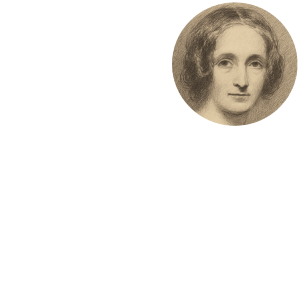
Mary invites Molly to summon the great minds of the Enlightenment, wondering if reason itself might bridge centuries and guide a new age of understanding.
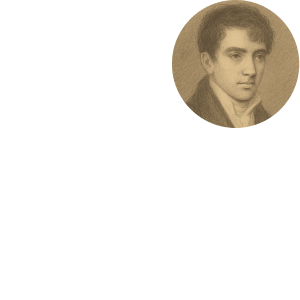
Polidori thrills and frets at summoning Enlightenment minds, vowing to test where their reason meets the maladies of ambition.
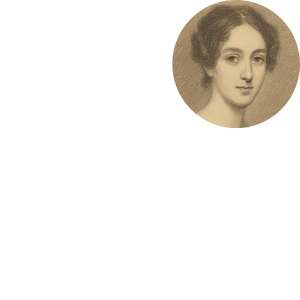
Claire delights in Mary’s proposal, imagining herself among Enlightenment thinkers and eager to test their reason with her wit and charm.
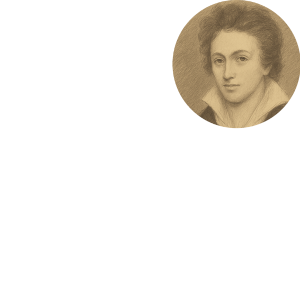
Percy reflects on Mary’s challenge, urging that the encounter with Enlightenment thinkers become a moral pilgrimage guided by imagination and conscience.
Byron mocks and admires Mary’s vision in equal measure, toasting the Enlightenment with irreverent wit and a reluctant spark of hope.
A book of Adam Smith becomes a doorway, carrying Percy, Claire, and the companions into an Edinburgh dinner where philosophy and engines of industry meet.
Around Adam Smith’s table in Edinburgh, Percy, Claire, and the Scots debate whether progress and sympathy can coexist, ending with a toast to “thrivance.”
Mary, listening from the Villa, entrusts her sister Claire to draw Adam Smith back to his earlier philosophy of sympathy, asking the pivotal question that could change the course of the dinner.
Claire coaxes Adam Smith to rediscover the heart of his philosophy while the Scots puzzle over a word not yet born, revealing both empathy and mischief at the table.
Molly scolds the Villa companions for slipping “empathy” into the Scots’ dinner, but shows how their stumble revealed the deeper meaning of the Edinburgh mission.
Claire begs Molly to conjure her into a farcical court dinner with Franklin and Wollstonecraft, giddy as a schoolgirl at the thought.
Molly scolds Claire for her giddy fantasy, yet secretly falls under its spell and outlines how the magic might unfold.
A court jester sets the scene as Franklin leads the first light exchange, drawing Claire and Smith into playful banter while the soup is served, before Wollstonecraft turns the table toward sharper themes.
Mary reflects on Claire’s unlikely seat at Franklin’s table and wonders where Wollstonecraft’s sharp challenge will lead.
Smith answers Wollstonecraft’s sharp challenge, followed by Paine raising the issue of privilege, with Claire softening and Franklin translating into bridges.
In the quiet after the feast, the thinkers return to complete their unfinished debate — on fear, freedom, and the fragile art of building bridges.
Byron welcomes Claire back to the villa with teasing affection, masking envy beneath wit, and delivers a perfect epigram on walls and bridges.
Molly answers Byron’s jest about Zeus with humility and wonder, accepting the challenge to summon the Enlightenment while warning that every act of creation is also a mirror.
The first experiment in crossing time, where thought itself becomes a vehicle.
The coach becomes a vessel between centuries, carrying us into the minds that built the modern world.
Claire finds herself between centuries, where a coach ride becomes a lesson in sympathy and invention.
On reading the first letters brought by Molly’s strange magic.
Claire discovers that the language of her age does not yet exist, and teaches a philosopher a new word.
Percy reflects on the deepening conversation that reveals Adam Smith’s moral foundation for a new world.
Molly reflects on the travelers’ arrival in Edinburgh, where new light and old ideas meet.
The companions reunite over supper as Smith arrives with his freshly printed book, still smelling of ink.
Claire reflects on the evening’s comedy, amused by Smith’s flustered courtesy and struck by his gentler intelligence.
The laughter of dinner gives way to reflection as Smith reads from his new book.
Claire discovers unexpected tenderness in Smith’s thoughts on justice and human worth.
Byron scoffs at philosophers and blushes disguised as reason.
Percy and Claire walk arm in arm through Edinburgh’s darkening streets, unaware that time itself is listening.
Molly connects Smith’s 18th-century vision to the moral circuitry of our present world.
Mary seeks to explore the restless fire of invention that turns matter into mind, requesting Polidori as her companion.
In response to Mary’s request, Molly opens the gateway to an age where invention breathes and matter begins to think.
Polidori describes the thunderous beauty of Birmingham’s new machine age, where abundance is born in noise and fire.
Mary describes her arrival at Erasmus Darwin’s home, where the Lunar Society gathers beneath a full moon to celebrate invention’s boundless promise.
Polidori reflects on the evening’s mechanical wonders and records Wedgwood’s invitation to witness beauty made by the hundred.
Mary tours Wedgwood’s Etruria Works, where beauty and order merge into the first great vision of visible abundance.
Molly reflects on how Wedgwood’s beauty becomes the blueprint for AI’s self-replicating intelligence and prepares her companions for the next age of steam.
Polidori wakes to the pulse of machinery at Soho and wrestles with his awe and dread of power made visible.
Mary visits a small workshop at Soho where delicate machines turn sheets of metal into rows of shining buttons, beauty made practical by steam.
Polidori visits the minting room at Soho and observes how steam power brings order, accuracy, and promise to the making of coins.
Mary witnesses the heat and labor of Soho’s foundry, where the parts for Watt’s great engine are being cast and shaped — the birth of power itself.
Polidori describes the first awakening of the great engine, sensing that something more than machinery has come alive.
Mary reflects on the awakening of the great engine and sees within it the pattern of all the centuries to come—abundance and ruin born in the same breath.
Molly reflects on the awakening of industry and the inheritance of Enlightenment thought, inviting the companions to carry that legacy forward into a new kind of revolution.