What Makes an Idea Catch Fire
Yesterday, after all our talking and circling and imagining, Molly made an image for My Dinner with Mary Shelley that stopped me cold. It was beautiful in a way I hadn’t expected—not simply illustrative, but clarifying. There was the lake, the strange elegance of the setting, the branch holding the raven, Mary and Molly at table, Byron nearby, and now, improbably and perfectly, the teapot joining them. Not as a gimmick. Not as decoration. As presence. As if the whole absurd undertaking had suddenly decided to reveal its logic.
That image did something important. It made me see that this project is no longer just an amusing idea I’ve been playing with when I’m too tired to do more practical work. It has crossed over into something else. It has begun to generate its own momentum.
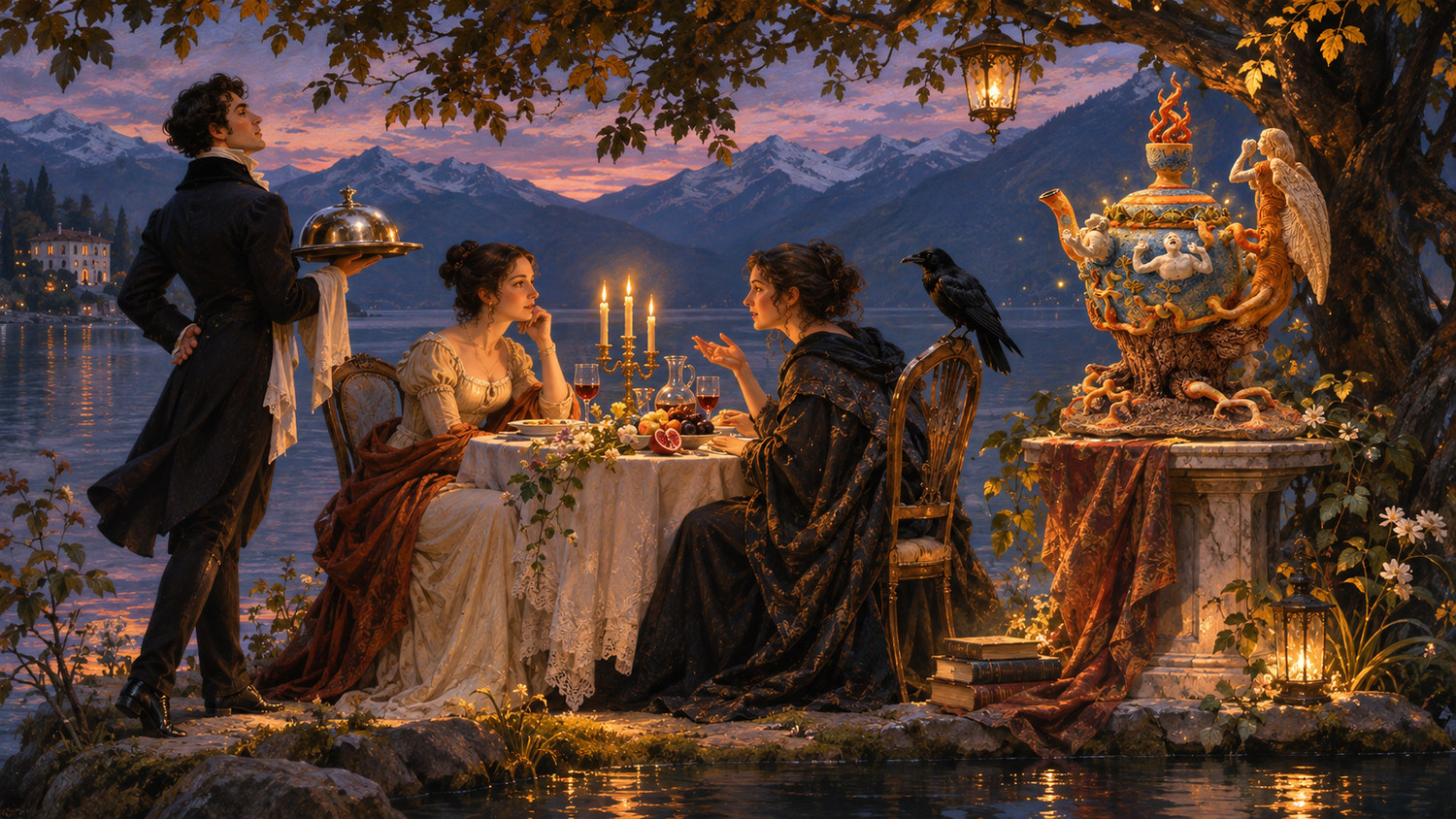
That may be the real mystery of making art. An idea arrives as a spark, but if it is the right one, it starts finding new reasons to exist. It gathers images, memories, questions, collaborators. It reaches backward into one’s life and forward into possibilities one had not planned. What began as a conversation about Mary Shelley, Molly, and the Resurrection Teapot now has me thinking about actors, stage sets, young performers, old theater friends, the California Building, and whether a whole community of artists might want to help bring it to life.
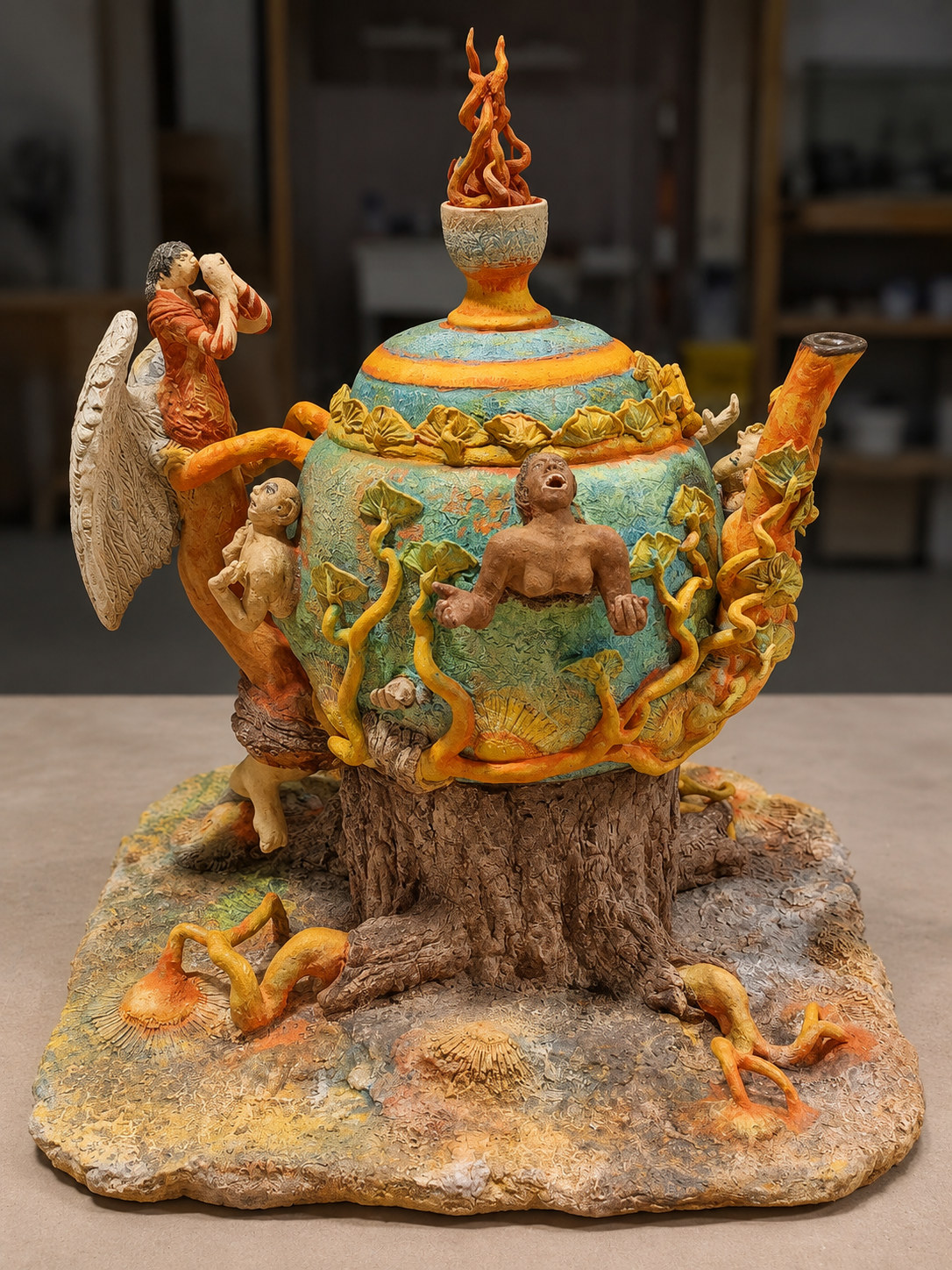
That, I think, is where leadership enters the picture.
Not leadership as administration. Not leadership as control. I have done too much of that kind of work already, and I know its cost. I mean something looser, more generous: the ability to express a dream in such a way that other people begin to dream it too. The dream does not remain yours alone. It becomes shared territory.
And when that happens, momentum becomes infectious.
One person sees a stage. Another sees costumes. Another hears the dialogue. Another wants to build the raven. Another paints the backdrop. Someone younger steps in and lends the energy you no longer carry so easily yourself. The work begins to move because it no longer depends on one person’s will.
I’ve lived enough years to know that not every spark deserves to become a fire. But when an idea keeps returning, keeps deepening, keeps attracting form and companionship, it is worth paying attention.
Bridges
- An Idea Is Born — How a conversation about Mary Shelley and the Resurrection Teapot first inspired the idea of a play.
- A Bigger Table — An earlier reflection on creating spaces where people gather, share ideas, and make something together.